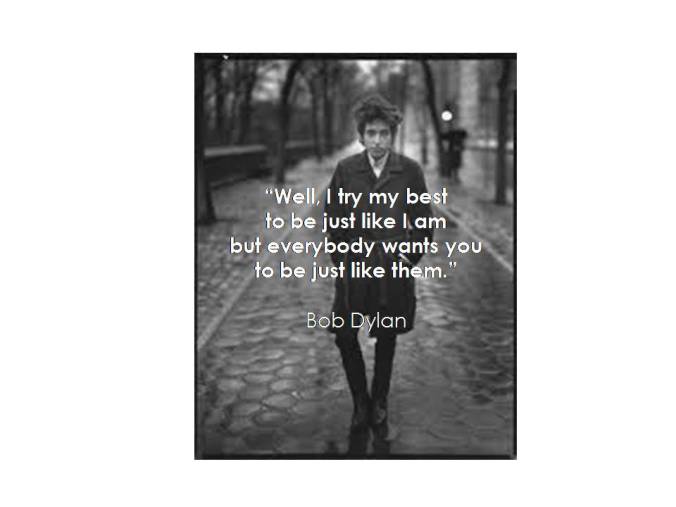
Author: frankiegolightly
Good Morning, Good Morning To You
“Finish each day and be done with it.
You have done what you could; some blunders and absurdities have crept in;
forget them as soon as you can.
Tomorrow is a new day; you shall begin it serenely and with too high a spirit
to be encumbered with your old nonsense.”
— Ralph Waldo Emerson
My Dad wakes up happy. It can be very annoying. As the day wears on he can descend into his typical grumpy old man persona, but even when he’s sick, crippled by arthritis and it’s a struggle to get out of bed he still does so in a good mood.
It has always been this way and I think it must be a genetic disposition. My sister is the same whereas, in this instance at least, I take after my mother. Growing up, Dad and Sis would be whistling around the kitchen of a morning, cracking eggs and jokes, banging pans, while my mum and I would sit at the table nursing a coffee and slice of toast throwing dagger looks at them and wondering why they couldn’t keep the noise down.
Even though I now love mornings, it still takes me a while to warm up to the day. I love the feeling of being outside before the rest of the world wakes; there is a different quality to the air around dawn that speaks to possibility and potential in the day ahead. But I still don’t wake up jumping out of bed bursting with energy. One of the reasons I enjoy being an early riser is that it generally gives me space and quiet to ease myself into the day, all I require is a little solitude to set me up. Let me wake up at my own pace and I’m happy.
I wouldn’t swap places with either my Dad or my Sis, I would say that overall I’m a happier and more optimistic person than either of them. But in a way I envy their start to the day: as if the night has truly washed away their troubles and worries and they can greet the day completely anew, fresh and unencumbered by any old nonsense.
Authenticity vs. Affectation: how important is it, anyway?
I love a good story. I love make-believe. I frequently lose myself in a good book or film. I believe in making the best of ourselves and can even appreciate the technique of faking it until you make it. So why does affectation dance on my last nerve? A few days ago in a coffee shop my attention was drawn to a group of three women. Actually, it was drawn to one of the three, whose manners were designed for precisely that purpose, so I didn’t feel bad looking. The way she held herself, the way she laughed, everything felt contrived and it made my lip curl. Being in the company of someone with artificial behaviour sets my teeth on edge (a proper visceral reaction which probably says something about me). But if reality is just our perception anyway, where is the line between real and fake?
I’ve been struggling to write this blog, to define why it’s so important to me (I guessed that posting “Authenticity = Good, Affectation = Bad” probably wouldn’t cut it). Not getting much help from the friends I tried to rope in hoping to pinch their thoughts, I went back to the beginning and checked the dictionary. The Oxford English Dictionary defines affectation as “behaviour, speech or writing that is artificial and designed to impress; a studied display of feeling”, whereas authenticity is “the quality of being genuine”. So let’s start there: affected behaviour doesn’t impress me, it’s authenticity that takes courage.
Looking around I see plenty of successful, inauthentic people. So does it matter? In the way that my reaction says something about me, the need to behave in such a studied and false manner tells us something about those who do it. On my kinder, more generous days I can appreciate the possible insecurities behind it. But generally it just irritates me and I see it as a form of cheating. OK so now I’m starting to understand: perhaps I don’t mind ‘faking it until you make it’ because that’s a technique designed to help you feel better about yourself, whereas affectation is more to do with getting others to feel better about you but based on a falsity.
All of us present different sides of ourselves at different times, the side most appropriate to the occasion. And it’s human nature to want to impress (possibly something to do with a primal need for security within a tribe or such like), but forming a genuine connection with another is hard enough without affectation undermining the value of our real selves. How can you connect with someone who only presents ‘a studied display of feeling’? But mainly it’s just annoying to be around. An irritating interruption to the business of getting to know each other.
Thought for the Day

Real or Fake – Blurred Lines
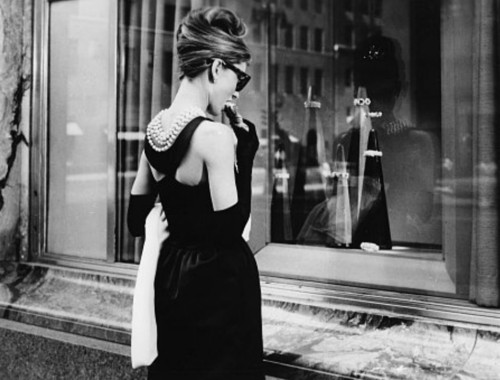
“She’s a phony. But she’s a real phony. Know what I mean, kid?”
Quote from the film ‘Breakfast At Tiffany’s’, describing Holly Golightly
Something that used to happen on that little Maldivian island was the fake wedding phenomenon. I may be wrong but I’m making the assumption that this is a relatively new development driven by social media: couples taking photos on the beach of their pretend wedding. They wouldn’t actually get married there but would bring the whole shebang with them to make it look like such. Full meringue-style wedding dresses, suits, flowers and sometimes an entourage. All to pose on the beach for a fake wedding photo.
I’m relatively old and thankfully did most of my growing up before the advent of the likes of facebook, so this is a strange concept to me. In ‘my day’ photos were taken to capture memories of events. You know, important stuff actually happening in your life that you wanted to commit to film as a reminder of how that moment felt. Those were the days when you used to have to get cartridges of film developed, which would take days or sometimes weeks. Yes, young folk out there, no immediate gratification for us! But the anticipation of getting those photos back added to the pleasure, waiting to see which ones had come out clearly, which ones were half obscured by a finger. Hoping that moments which could never be repeated would be captured for all time on a precious piece of 6×4 shiny paper. The possibility that those moments wouldn’t be properly recorded perhaps even making them more precious at the time: we committed them to memory because we couldn’t rely on technology to do it for us (in the same way I can still remember my best friend’s phone number from 30 years ago, but have no clue what her current one is because technology remembers it for me). More to the point, the focus was on the moment, not the recording of it.
Don’t get me wrong, I think modern technology is a wondrous thing and I wouldn’t be without it (well, sometimes, I would). But I can’t help feeling something has been lost, thrown out with our throw away culture. That we can take 400 photos of an evening and see/delete/revise on the spot somehow diminishes the essence of it. Simply holding up a recording device creates a barrier, a distance between us being in the experience of the moment by changing the focus.
So where is the line between real and fake? The fake wedding is a real fake wedding, after all, so I suppose those couples are capturing true memories of something: ”Look, Darling, here’s a photo of that special day we pretended to get married on the beach …”
(photo in the public domain)
And My Thanks Go To …
Hollywood is built on making things up. Pretending is what they do and authenticity plays only a bit role in a town where to get ahead you have to ‘play the game’. And playing the game often involves lying directly to a face; in fact this is accepted and expected behaviour. But I love storytelling and this environment creates films which can genuinely move us to real emotion.
As the 86th Academy Awards arrived, like many I started thinking about memorable acceptance speeches. Not a breeding ground for authenticity but take out the stunts and politics, and the moments we remember are the genuine ones. Whether it’s the tears (Paltrow), the exuberance (Cuba Gooding Jr, Affleck & Damon and McQueen’s effusive jumping last night), or the sincere gratitude (Hanks, Bullock), it is sharing genuine emotion that moves and touches us. Still, I didn’t expect to be writing about it here – until this:
“What I’ve learned is I don’t have to be anyone else,
I can be myself and do extraordinary things like this
that I didn’t think were possible. You have to allow
for the impossible to be possible.”
Lupita Nyong’o – Best Supporting Actress
Thank you, Lupita, what a gift.
To Thine Own Self Be True
I’ve just returned to England after more than two years living in the Maldives. I could’ve probably timed it better: there are concerns that with climate change the Maldives may be under water in 40 years, but with the current flooding it feels as if England could disappear by next weekend. Even so, it’s good to be back.
Working in hospitality can be an easy way to lose sight of your authenticity, and living and working on a small island that is nothing but a resort means you have to always be ‘on’. You can’t go to the pub after work and moan about your day because the people in the bar are the same people you work with. And of course you’re always surrounded by guests who quite rightly should only see the polite and positive you. With approximately 600 staff from more than 15 different countries serving 500 guests, it’s an environment that exaggerates everything, a fishbowl of humanity living under a microscope. Sometimes it felt like the prettiest prison on earth.
Don’t get me wrong that’s exactly how it should be. But it’s an environment where I found the soundtrack in my head jarring more and more with the face I presented externally. And the more you aren’t able to be true to yourself, the more important it becomes. How easy is that, really, though? I don’t think you need to be working on a small island in the middle of the Indian ocean to feel that sense of disconnection between who you think you should be and who you really are. Old Will may have rightly said ‘To thine own self be true, and it must follow, as the night the day, thou canst not then be false to any man’ but that’s easier said than done, huh. Most of us face daily challenges to live up to this. That’s my main motivation to write this blog: how easy is it to be me and what does that even mean? I’m already confused. It could have just have easily been subtitled ‘a year of living mindfully’ as I think it starts right there, with an awareness of how we move through our days and questioning what’s true.
So here goes. Whatever challenges the real world brings, I hope to meet them honestly and truly. As honestly and truly as I can, anyway. And I’m really looking forward to not having to dress for breakfast.
 Let's Be Frank